Editorial cartoon: Deflation

The Wrong Side of History

Have you noticed that there are no statues, postage stamps, or medals honoring George Wallace standing in front of the schoolhouse door saying “Segregation now, segregation tomorrow, segregation forever”?

That’s because, despite the fact that he had the support of many people, he was wrong. He was the Bad Guy who wanted to force his prejudices on everyone else.

The people who are now standing in the way of marriage equality are a pretty good mirror image of this. Oh sure, they absolutely think they are right and have the approval of their god in this, but so did the racists who fought to keep innocent black children from going to school.

None of these people will be reading this blog, so I’m preaching to the choir — but some of you may want to ask yourself that question. Are you on the wrong side of history? Perhaps on similar issues, such as transgender rights?

History leads to more equality, not less. History means more acceptance of those who are different from us. History skews liberal.

My conservative friends especially might ask this about many of their political views, perhaps concerning health care. Let’s face it, historically conservatives opposed social security, medicare, medicaid, gay rights, women’s rights, voting rights, the civil rights act, minimum wage, and many other progressive reforms that later became law and now are supported by the vast majority of Americans, including most conservatives. They were on the wrong side of history.

Are you?

Editorial cartoon: How it Happened

Nothing Civil About this Disobedience

by Guest Blogger Michael Strauss

The United States has a proud tradition of civil disobedience. And this tradition is one that is heralded by those on both the right (Boston Tea Party, Cliven Bundy) and left (Ferguson, Baltimore). Once again the cry and hue for civil disobedience is being raised, this time primarily by Republican legislators and elected officials, in response to the Supreme Court ruling in Obergefell v. Hodges (legalizing gay marriage nationally).

But this raises a rather simple question: Is this actually civil disobedience?

As an old friend stated, there seems to be nothing civil about this disobedience. And while it was meant as a humorous quip, it is also rather on the nose as well.

First and foremost, civil disobedience, at its core, is still disobedience. When you disobey the law, no matter your reasons, you are punished for that disobedience. That is the side of civil disobedience we always seem to conveniently forget.

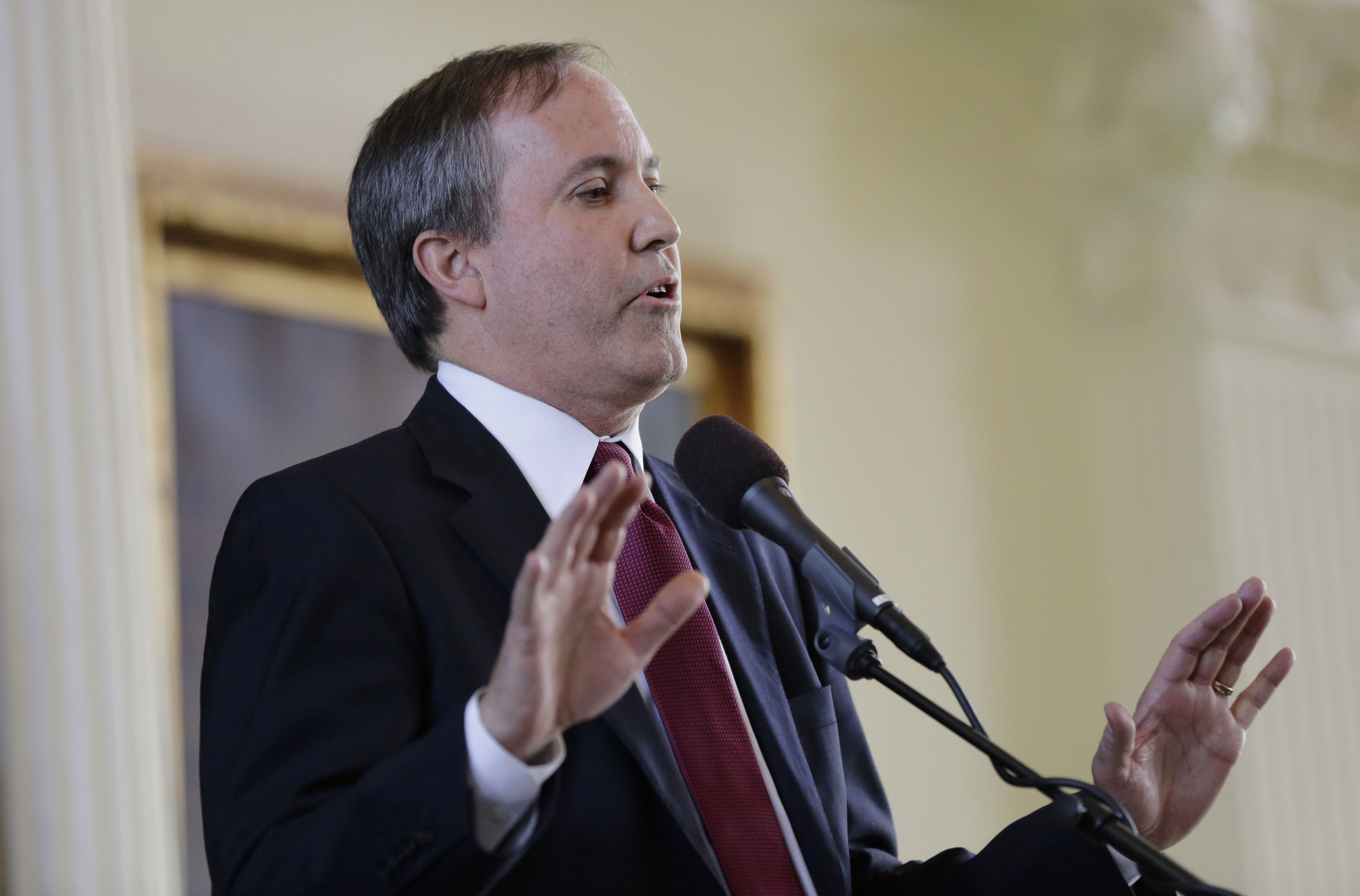
Texas AG Ken Paxton ignores the oath he took to uphold the Constitution

Texas AG Ken Paxton ignores the oath he took to uphold the Constitution

Despite the fact that he was one of the most peaceful men ever born, Martin Luther King Jr. was arrested 30 times for civil disobedience. He understood he would be arrested. In fact, mass arrests were literally part of his plan for building publicity for his movement. He never struggled against those arrests and actually refused to accept bail in some cases, in order to show support for his cause.

MLK understood that part of civil disobedience means that you accept your punishment willingly. That is why, no matter how much liberals applauded Bree Newsome (the woman who scaled the flagpole at the SC capitol and removed the Confederate flag), it is right and appropriate that she was arrested and will be tried. If she truly believes in her cause, she should plead guilty.

And then there is Ken Paxton. Ken Paxton would have you believe that he is following in the footsteps of MLK with his civil disobedience against the Supreme Court ruling, but his isn’t. Even if you accept his rather flimsy argument that he is fighting for the rights of religious Americans (that for some reason always seem to be Christians, despite the fact that both Jews and Muslims are likely to hold the same beliefs on “traditional marriage”), rather than against the rights of non-heterosexual Americans, he still isn’t engaging in civil disobedience.

Unlike MLK or Newsome or those patriots in 1773, he simply is unwilling to suffer the penalty for his disobedience. Just the opposite. He explicitly told the clerks and probate judges of Texas that they would have to suffer for obeying his order to invoke religious liberty, in direct violation of the Supreme Court ruling, but that he would be safe in his Ivory Tower. That isn’t civil disobedience. That is simply an abuse of power.

Which brings us to the second reason that Paxton and Abbott and Jindal (and any other elected or appointed official following this path) isn’t engaging in civil disobedience. As my old friend said, there is nothing civil about it. The word “civil” is a reference to Joe or Jane Q. Public. Martin Luther King Jr., the Tea Party patriots, Bree Newsome, Susan B. Anthony and even Cliven Bundy all share a common trait. None of them wielded direct legislative, judicial, or executive power.

Unlike Jane and Joe Q. Public, government officials have legal power and tools to try to change laws. Even Supreme Court rulings can be overruled (the Dred Scott decision is no longer the law of the land). The process may be ponderous, but those tools are available to people at pretty much every level of government, especially to state governors. The average citizen doesn’t have those tools or power, which is why they engage in civil disobedience. Anyone who uses power invested in them to violate the law is simply being a fascist dictator.

If Ken Paxton truly wishes to engage in civil disobedience, then he needs to follow the example of Linda Barnette, the woman who quit her job as a Grenada county clerk rather than issue marriage licenses to non-heterosexual couples. Whether you agree with her stance or not, her decision is a shining example of the correct way to object to this Supreme Court decision. Linda Barnette, a simple county clerk, made a principled, legal stand for her beliefs.

Why are Paxton and Jindal incapable of following her example?

Michael is a New Jersey native that somehow landed in Pittsburgh.  He is a writer by trade and an amateur political commentator by choice.  He enjoys tweaking the noses of liberals and conservatives alike.

Editorial cartoon: Supreme Court Victories

“As long as it’s our religion doing it, it’s OK”

As expected, there have been plenty of proclamations from religious extremists about the upcoming end of the world. They think God will judge the US harshly for allowing people in love to get married. Slavery? Killing of natives? Internment camps? Nope, those didn’t attract God’s judgment, but this will.

Catholic priests are saying, without a hint of irony, that this decision will cause children to be sexually molested. Various commentators are once again floating the “Now we have to allow people to marry their pets” argument because, as we all know, whenever new rights are gained, logically we have to extend them to animals next. That’s why dogs have the right to vote.

Then there was that “friend” on Facebook who said, “Since sin is now legal, murder will be next.” Yes, of course. The two are absolutely comparable. There’s just no way to refute such logic.

I’ve stopped trying to argue with True Believers whenever possible (including the gun nuts, the 9/11 “Truthers”, the various conspiracy-minded among us). But what bugs me the most is when they can’t even see the basic irony in their own arguments.

These Christians are almost always the ones screaming about how terrible it is that Sharia Law could be used in America.  Sharia Law has many things in common with evangelistic Christian law — a prohibition against gay marriage, admonitions about women being subservient to men, and so on — but if anyone tried to use the Quran to pass these into our laws, these Christians would be up in arms.

But it’s not because they’re against forcing religious laws upon America — they just want it to be their religion we’re all forced to follow.

Editorial cartoon: Marriage License

No, The Gay Marriage Case has Nothing to do with Guns

Fox News commentator Allen West (a non-lawyer) wrote an article recently saying that since the Supreme Court gay marriage case says this must be applied over the entire country, then clearly it has set a precedent to allow for “conceal and carry” in all states.

This shows a real misunderstanding of the law.

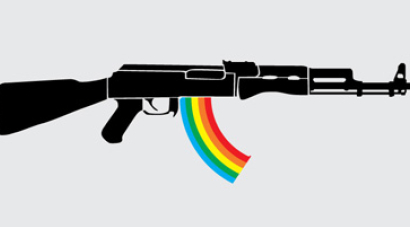
First of all, the gay marriage case had to do with the 14th amendment, which prohibits discrimination against people. Despite the fact that the Supreme Court has called corporations “people” it’s not about to call guns, cars, or toasters “people” any time soon.rainbow.ak_

The analysis used in the gay marriage case is old. Like 50 years old. This same analysis was previously used to give rights to blacks and then later to women. It has just been expanded to include gays and lesbians. It is not a new analysis.

If the gun lobby could use this same analysis to do what the gun lovers want, they would have done it 50 years ago.

The short version: If the government wants to take away the rights of someone, the law must pass the “strict scrutiny” test:

It must be justified by a compelling governmental interest. While the Courts have never brightly defined how to determine if an interest is compelling, the concept generally refers to something necessary or crucial, as opposed to something merely preferred. Examples include national security, preserving the lives of multiple individuals, and not violating explicit constitutional protections.
The law or policy must be narrowly tailored to achieve that goal or interest. If the government action encompasses too much (overbroad) or fails to address essential aspects of the compelling interest, then the rule is not considered narrowly tailored.
The law or policy must be the least restrictive means for achieving that interest. That is, there cannot be a less restrictive way to effectively achieve the compelling government interest. The test will be met even if there is another method that is equally the least restrictive. Some legal scholars consider this “least restrictive means” requirement part of being narrowly tailored, though the Court generally evaluates it separately.  [NOTE:  I copied this from wikipedia, but it’s correct.]

It is very difficult for laws that discriminate to pass this test. The Supreme Court did not change this test at all, but merely added gays and lesbians to the test (at least as far as marriage goes — other discriminatory laws against gays and lesbians will be challenged under this test soon and should also fail, using this case as precedence).

This test is not used to determine whether everyone has the exact same rights as they travel from state to state — but West (and the people who foolishly believe him) are convincing themselves that they are being discriminated against because they don’t have the same rights as someone in another state.

Under this logic, there would be no more federalism at all. Using that logic, any law passed in any state would have to be enforced in every state.

Does that mean that marijuana would be legal everywhere? Hooray! Oh wait, we’d first have to decide which state laws apply — What if it’s decided that the state laws that prohibit guns from being carried everywhere are the laws that apply over the entire country? Why are these people assuming it’s the law they want that will prevail?

“But but,” the gun lovers scream, “the court said that you have to give gays these rights because it’s based on ‘certain personal choices central to individual dignity and autonomy’ and dadgummit, it’s our personal choice to buy guns without background checks and carry them into churches and shopping malls whenever we want to!”  Besides being ridiculous and not at all what the gay marriage case was about, this is also not what the 14th amendment is about.

Seriously, I’m not even going to dignify this by explaining why. If you can’t see why there is a difference between the fundamental right of all adults to get married and the right to own an inanimate object, then you’ve become so brainwashed by your guns and the gun lobby that there is no hope for you.

Editorial cartoon: It’s just “marriage” now

What the Court’s Gay Marriage Decision Really Says

By Guest blogger Terri Lynn Coop

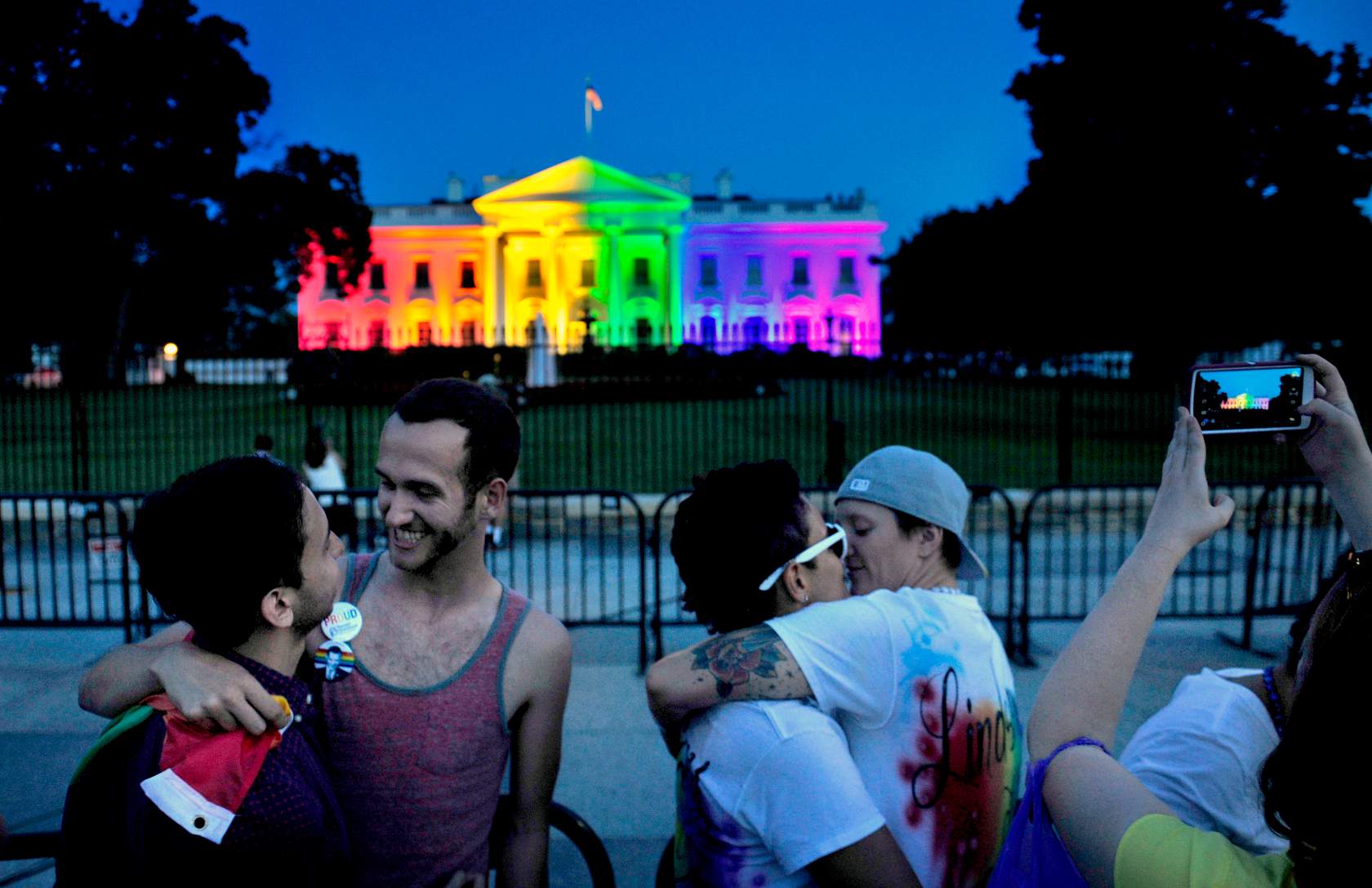
June 26, 2015 was one of those days when the wheel of history turned. At the center of the social media celebration and barrage of rainbows is the 35-page opinion on marriage equality penned by Justice Kennedy.
As both a lawyer and an ally, I find the opinion to be succinct, elegant, iron-clad, and a doorway to further equal rights activism here in the good old USA. After I held a series of light-hearted law “lectures” on the subject on Facebook, Mike invited me here to the ‘Quest to take a look at some of the key parts, both obvious and less so, of the opinion.

Overall, the Court grounded the opinion firmly in the 14th Amendment rights of Due Process and Equal Protection under the law. Out of that principle has sprung the right to privacy in what the court calls “intimate relations.” Kennedy went straight to the keystone cases such as Loving that struck down racial bans on marriage and Griswold that protects the right of married people to use contraceptives (yeah, that had to be litigated).

“This Court has invoked equal protection principles to invalidate laws imposing sex-based inequality on marriage . . . and confirmed the relation between liberty and equality . . .”

Strong words right there. We can’t have personal liberty without equality.

“The right to marry is a fundamental right inherent in the liberty of the person, and under the Due Process and Equal Protection Clauses of the Fourteenth Amendment couples of the same sex may not be deprived of that right and that liberty.”

Part of deciphering judicial opinions is to look for the key words and phrases. Here it is “may not.” In other words – NO. No as in Grumpy Cat NO. Nyet. No way, no how are same-sex couples to be deprived of the fundamental civil right to marry.

The Court went on, conflating liberty and personal identity:

“The fundamental liberties protected by this Clause include most of the rights enumerated in the Bill of Rights . . . In addition these liberties extend to certain personal choices central to individual dignity and autonomy, including intimate choices that define personal identity and beliefs.”

The Court has just connected being gay with personal identity, autonomy, dignity, and civil rights. That sets up a key statement from later on in the opinion.

This Court is heavy on precedent. It is a thread through their decisions. This Court backed this pronouncement up with three cases where marriage rights were affirmed for mixed-race couples, prison inmates, and men who were behind in child support cases. Bottom line, other than the requirements that the parties be of age, of mental competency, and not related by a certain degree of marriage or blood, American citizens have the right to marry whoever they want to.

Answering the “traditional marriage” naysayers, the Court held that times change. Society changes and marriage has changed. Traditionally, women were essentially the legal property of their husband under coverture laws. As society began to accept that women were, you know, people, the equal protection laws were used to throw out the old laws.

“These new insights have strengthened, not weakened, the institution of marriage. Indeed, changed understandings of marriage are characteristic of a Nation where new dimensions of freedom become apparent to new generations, often through perspectives that begin in pleas or protests and then are considered in the political sphere and the judicial process.”

In other words, there is no such thing as traditional marriage. There is only marriage as defined by the mores of society. The odd argument that same sex marriage will cause the demise of opposite sex marriage was dismissed as being “without logic.” That is judicial shorthand for “that’s just weird, shut up now.”

The last big issue addressed was the question of states’ rights and use of the legislative process to parse civil rights. The answer was another resounding NO.

The states’ rights argument centers on marriage being traditionally left to the states to regulate under the 10th amendment. Kennedy says “Okay, you asked for it . . .”

“Yet by virtue of their exclusion from that institution, same-sex couples are denied the constellation of benefits that the States have linked to marriage. This harm results in more than just material burdens. Same-sex couples are consigned to an instability many opposite-sex couples would deem intolerable in their own lives. As the State itself makes marriage all the more precious by the significance it attaches to it, exclusion from that status has the effect of teaching that gays and lesbians are unequal in important respects.”

Inherent in the right to regulate is the responsibility to regulate fairly. Or else SCOTUS will step in and make you play nice.

A nod is given to the “religious conscience” opposition movement, but doesn’t bode well for the flurry of what I call hate-pizza laws sure to come pouring out of statehouses in the red states.

“Many who deem same-sex marriage to be wrong reach that conclusion based on decent and honorable religious or philosophical premises, and neither they nor their beliefs are disparaged here. But when that sincere, personal opposition becomes enacted law and public policy, the necessary consequence is to put the imprimatur of the State itself on an exclusion that soon demeans or stigmatizes those whose own liberty is then denied. Under the Constitution, same-sex couples seek in marriage the same legal treatment as opposite-sex couples, and it would disparage their choices and diminish their personhood to deny them this right.”

Object all you want on a personal level, but when you codify it into law, well then you’ve poked the bear and that bear has big sharp legal teeth. This opinion uses the word “but” like a ninja sword.

More proof that the Court does watch TV and knows what is being said about “activist” and “imperial” courts. This is a reminder of the role of the courts delivered with straight and hard with a verbal clue-by-4:

“An individual can invoke a right to constitutional protection when he or she is harmed, even if the broader public disagrees and even if the legislature refuses to act. The idea of the constitution “was to withdraw certain subjects from the vicissitudes of political controversy, to place them beyond the reach of majorities and officials and to establish them as legal principles to be applied by the courts. This is why “fundamental rights may not be submitted to a vote; they depend on the outcome of no elections.”

BOOM! We don’t vote on the rights of our fellow citizens just like they don’t vote on ours. That’s why they are called rights. Also another warning to states that are toying with discrimination laws – the Court is ready and waiting for you.

This opinion is full of this type of elegant direct language. However, toward the end of the opinion is a single sentence that is easy to miss and could be a game-changer:

“And their immutable nature dictates that same-sex marriage is their only real path to this profound commitment.”

Immutable nature. Civil rights language. In that sentence the Supreme Court of the United States just said that being gay is not a choice, that it is an unchangeable part of a person’s personal identity. That opens the door, really kicks down the door, to sexual orientation becoming a protected class. Twenty-nine states now allow employment discrimination on the basis of being gay. This could be the first pebble in the landslide that buries those and other laws.

That big rainbow out there shines on everyone. We are watching history every bit as important as women getting the right to vote and the Civil Rights Act of 1964. It’s a good time to be an American.

Thanks for the invite!

Terri Lynn Coop is a lawyer by education, a writer by profession, and an unapologetic geek the rest of the time. She’s been known to blog at Readin’ Ritin’ & Rhetoric. Her first novel, a legal thriller, “Devil’s Deal,” is available through Amazon.