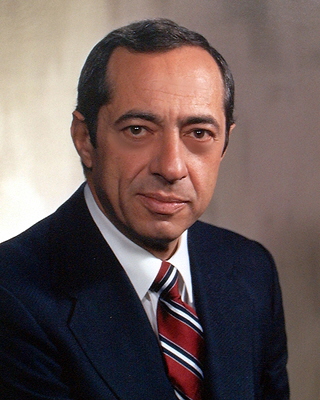
Italian, eh? Must be with the mob.

One of the most disturbing things people have said about Mario Cuomo after his death was that he didn’t run for President because he didn’t want to expose his mob connections.

Right. All Italians who are successful have mob connections.  Just like all blacks have gang connections, and all Irish are alcoholics. Everybody knows that.Mario_Cuomo

The fact that there are no “mob connections” with Cuomo doesn’t stop the rumors. As governor of one of the largest states in the country, he was under much scrutiny, especially once he was seen as a possible Presidential candidate. (And let me say as an aside, I really wanted him to run. He would have been a great President.) He came from an immigrant family and got where he was by working hard and graduating at the top of his law school class. Even as the valedictorian, he had trouble finding a job because he was Italian and had no connections, mob or otherwise. Nothing of the sort ever turned up other than rumors. The press loves a good scandal, so it’s not like they didn’t look.

But let’s discuss what led to those rumors, which were completely unfounded. Why did they surround him and not other candidates?

Solely because he was Italian.

Now, I’m half Italian and I’ve even gotten a few comments like that over the years. My father came to America when he was a baby and he ended up in an orphanage so he didn’t have much of an Italian upbringing. My mother is of “Pennsylvania Dutch” stock. We were raised as Methodists. Mom knew nothing about Italian cooking, we had no huge extended Italian family visiting us, and to this day, I don’t know anyone in “the mob.” I have no more knowledge of Italian culture than any other kid raised in Richmond, Virginia. But the stereotype persists.

And that’s why rumors of those sorts are hurtful. People who would never think of saying that all blacks are gangsters apparently have no problem assuming all Italians know or are mobsters.


Editorial cartoon: New Years Resolutions

Wolf won the Governor’s Race by Being a Democrat

A murder of Tea Party governors was elected four years ago and they immediately went about destroying their states’ economies.  (I wasn’t sure what word to use to describe a group of Tea Party governors, and a “murder of crows” came to mind for some reason.)  In Maine, Michigan, Kansas and Pennsylvania, these governors went on to become the most unpopular governors in the country.

Governor Wolf (artist's approximation)

Governor Wolf (artist’s approximation)

“We will put our economic policies in place and the economy will boom!” they promised.  Of course, when they did, their states all suffered.  Pennsylvania dropped to 49th in job creation, for instance.

in the 2014 election, they were all vulnerable, with negative rankings higher than their positive ones.  Yet they were all re-elected, save for Governor Corbett here in Pennsylvania.  What made the difference?

Tom Wolf ran as a Democrat.  A real Democrat.

In every other state, political advisers told their candidates to tone down the talk about taxes, to distance themselves from Obama, and to appeal to a more conservative base.  They said to attack the other side relentlessly, and use negative campaign ads.

Not Wolf.  He emphasized his liberalism.  He stood for reasonable gun control, reproductive rights, marijuana decriminalization, Obamacare, and environmental protection. He invited Obama to travel the state and campaign with him.  And he immediately responded to every negative ad that came at him, without becoming negative himself.

Now there are other reasons those other Democrats lost as well — Voter turnout was the lowest it had been in 75 years, so that always hurts Democrats. But turnout was low in Pennsylvania, too.

I think there is a lesson here that Democrats should heed:  You need to give voters a reason to come out and vote for you. You have to stand for something.

As a wise man once said, if you give the people a choice between a Republican and a republican, they will chose the Republican every time.

Editorial cartoon: R-E-S-P-E-C-T

Reaffirming Last Year’s New Year’s Resolution

Last year, I vowed the following:

I resolve to avoid insulting my political opponents.

Oh, I may very well insult their views.  There are indeed members of the Tea Party that believe in absolute nonsense.

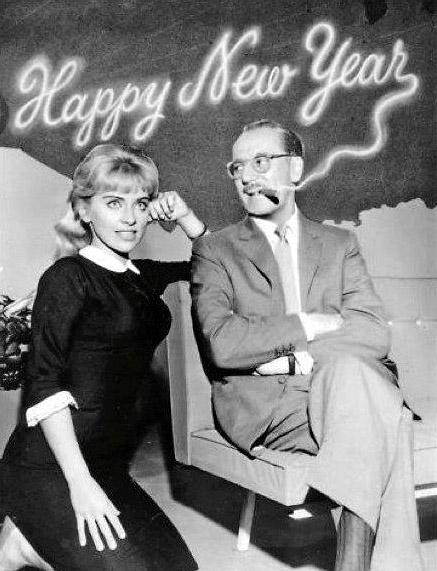
Here's a picture of Groucho Marx to cheer you up.

Here’s a picture of Groucho Marx to cheer you up.

I need to refrain from saying “That idiot twit Sarah Palin believes that taxes have gone up under Obama!”  I can attack her views without attacking her personally. There is enough ammunition for pointing out her mistakes without having to point out the person behind the mistakes.

I should have resolved to lose weight or something, because that would have been easier.

But seriously, it is just tremendously difficult to do what I tried to do, especially if you want to be sarcastic or humorous.  Sometimes a well placed insult can carry more of an argument than a simple argument.  And sometimes people really are idiot twits.

I have refrained from insulting people’s looks — while I admittedly can laugh at the Chris Christie fat jokes, I don’t think it adds a thing to a debate and is as irrelevant to his political views as is his race or sex, yet people who would never think of insulting a politician’s race see nothing wrong with insulting his or her looks.  I have at least refrained from stooping that low.  (Now watch — someone will pull up some old post from last year where I did just that.  I’m not perfect.)

Anyway, Happy New Year everybody.  Forget resolutions about yourself;  Make resolutions about how you will treat other people.  Even if you don’t meet them, you can try and as human beings that’s the best we can do.


Editorial cartoon: Happy New Year!

Advice for the drunk driver

It’s New Year’s Eve, and for me, that means one thing:  An increase of new clients charged with drunk driving.

I was never a drinker, and in fact, didn’t have my first sip of alcohol until way into my twenties. Even now, the most you get me to drink is a “girly drink” (as my wife calls them), and never that much. If I know I am driving, I don’t have any alcohol to drink, because I have seen too many lives ruined from drunk driving.police car
Sometimes the “ruin” is merely losing your license and paying lots of fines, fees, and lawyers costs, but I’ve also had clients who got into accidents that killed their passenger friends or others. It’s just not worth it.

But enough lecturing. Let’s say you don’t follow my advice, you have too much to drink, and you get pulled over by the cops. What legal advice can I give you?

First let me emphasize that I am not telling you how to get out of a drunk driving conviction. If you really are over the limit, face the penalty you deserve. You know better. But I have represented innocent people before who may have showed some signs but really were not intoxicated. I just won a trial this summer because the police could not meet their burden. So let me once more give this overall advice: don’t drink and drive, stupid. But if you do, don’t make it worse on yourself. Follow this advice.

Pull over as soon and as safely as possible. Make sure you park straight. Parking on a weird angle allows the officer to use that against you. (“He was obviously drunk because he parked at an angle to the curb.”)

Keep your hands on the steering wheel until the officer gets there. Don’t go for your wallet or open the glove compartment to get your registration. The officer will see “furtive movements” and may think that you’re hiding marijuana or going for a gun. You don’t want that. Not only will that put the officer on the defense, but it may give him or her a reason to ask to search the vehicle. Even if you have nothing to hide, you don’t want to be standing around for hours while they tear your car apart looking for nothing.

Once the officer arrives, open your window and let him or her know that you’re reaching for your registration and license and so on.

Be polite. Duh. Don’t argue with the officer ever. If you think you were pulled over for fake reasons, don’t bring it up. Let your lawyer do the arguing later; that’s what all that money you’re paying them is for. Say as little as possible about the situation (you can discuss the weather all you want).

Find out if you are being recorded. Many police cars have dashboard cameras these days. Those can help you. One of the reasons I won my case last summer is because of the camera. The officer said my client was slurring his words, stumbling, and acting intoxicated, but the video showed that he was not. (On the other hand, those videos have also helped the police to convict my clients as well. They’re useful because I can show them to clients who insist they were sober. “There’s no way you were,” I’d say as I show them the video. “We can’t win;  let me make a deal for you.”)

Let the officer know of any physical limitations you have. If you have a glass eye, make sure the officer knows you won’t be able to do that eye test they make you do. If you have a bad back, it could affect your ability to stand on one leg.

Always tell the truth! I shouldn’t have to say this, but people think if they lie, it will help them. It never does. “I only had one drink” when your Blood Alcohol Count comes out to .30% is an obvious lie, and when you try to take the stand to defend yourself later, the District Attorney is sure to say to the jury, “He lied about how much he had to drink so don’t believe anything else he said, either.”

That doesn’t mean you have to tell the truth. You have the right to remain silent. Do so!  Seriously, there is nothing you can say that will make things better. The officer has smelled alcohol on your breath, has watched you drive erratically, and otherwise has a good suspicion that you may be drunk. Don’t bargain, try to explain yourself, or offer sexual favors (Yes, I have had clients do that).

A quick aside: Remaining silent refers to incriminating yourself. You don’t have the right to remain silent when asked what your name is or where you live or basic questions having to do with identifying who you are. Cooperate fully with the officer for those purposes.

Agree to take the blood test. At least here in Pennsylvania, you don’t get to say, “No, I’d rather take a breath test.” You can refuse the blood test but then you will lose your license for a year even if you are completely sober. Almost every other state has similar laws. And almost every state is part of the “interstate compact” meaning if you lose your license in one state, all the others will enforce it in their state as well. It’s not worth it. Take the test. It may even help you if you really aren’t over the limit.

(EDIT UPDATE June 2017: The law has changed thanks to a recent Supreme Court decision. If this is your second or third DUI especially, you may be better off not taking the blood test. Refusal may mean you will lose your license for a longer time but it also means you may not have as much jail time. Find out what your local state laws are, or, better yet, don’t drink and drive and then you won’t have to even worry about this advice.)

Wait for the paperwork. Unless this is your third DUI or you have outstanding warrants, you will be allowed to go home afterwards. The paperwork will be coming in the mail. It may take weeks, and sometimes it has taken months. Don’t call the police and ask where it is — it’s not your job to bring yourself to trial. Feel free to call a lawyer, but most of us will say, “Wait until you get your paperwork” because we need to read the police officer’s version of what happened as well as to which charges were filed in order to best give you advice on what to do.

Remember: Just because you think you are sober doesn’t mean you are. Most drunks think they are perfectly fine. That’s why it is best that you don’t drink anything alcoholic if you are planning to drive.

Stay safe and have a happy new year!
Editorial cartoon: Quiz Time!

There are exceptions

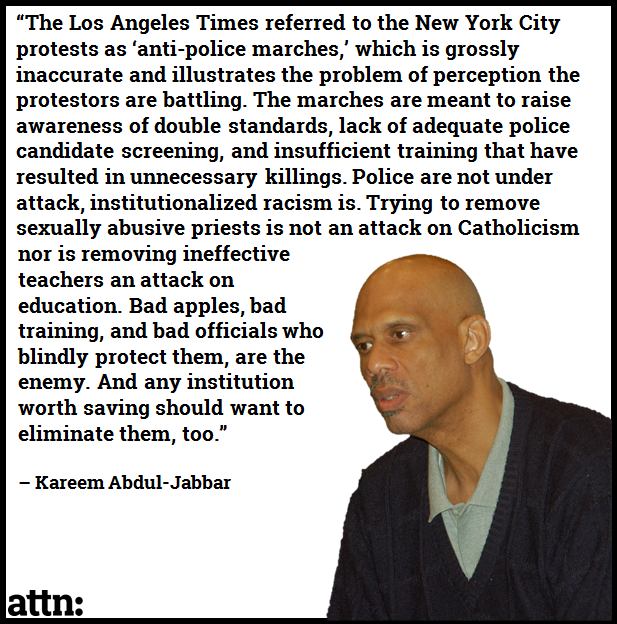
I love this quote, and I couldn’t have said it better myself.

10690087_795937323775062_1130560397236308661_n

A friend criticized the quote, pointing out that it should have mentioned exceptions:  Some protesters were indeed anti-police, for instance.

Ironically, that was the point of the original quote, wasn’t it?  You shouldn’t take the exceptions (racist police) to imply that all police are bad any more than you should take the exception (violent protesters) to imply that all protesters are bad.

If we have to add “there are always exceptions” to everything we say our conversations will be unwieldy and ultimately not very informative. (Of course, not every conversation. There are always exceptions.)

See?

Editorial cartoon: Off and Running