The Republican Health Care Alternative

As you know, prior to Obamacare, rates were escalating greatly, people were denied coverage for pre-existing conditions, children were denied care, insured could be kicked off if they reached their limit, and health care costs was one of the main reasons for bankruptcy and foreclosures.

Obamacare has had some tremendous problems in its roll out, though, and has come under a lot of criticism even as it addressed these problems.

Let’s now look at what the Republicans are offering as an alternative.

Oh.  Right.

Editorial cartoon of the day

A Few Actual Facts About Obamacare

Yes, the rollout initially went terrible because the website wasn’t ready. I’m not going to defend Obama over that, and even he apologized for “fumbling.” But let’s look at a few facts to place this in perspective.obamacare

1. The website isn’t Obamacare. It just allows you to compare prices and apply for subsidies. So you don’t have to use the website. You can get health care coverage in many other ways.

2. Not a lot of people have signed up through the website, but a lot of people are using other means, such as their own state’s website or their insurance broker.

3. To compare the numbers to Romneycare, the sign up is actually doing better. With Romneycare, everyone waited till the last minute and didn’t jump in and sign up during the first few months. (What? Americans procrastinate? Shocking!)

4. States with Democratic governors that actively promoted their own web page signs ups and encouraged people had good signup numbers. States with Republican governors that did everything they could to defeat Obamacare and make it as difficult as possible for their people to get health care had lower numbers. Who could have predicted that?

5. One of the problems the Obamacare website had may be related to massive hacking on the part of those trying to make it fail. A tool called “Destroy Obamacare” has been circulating which encourages hackers, and the site has been attacked at least sixteen times in the past month according to ABC News.

6. Republicans are concentrating on inadequate, scam plans that are being cancelled because they don’t provide enough coverage under the new law. Well, duh. That was the point of the law, after all — to give everyone real health care and not be ripped off by the insurance companies.

7. Republicans are also pointing out how some people’s rates are going up (the people who had scam policies in the first place). Where were they when everyone’s rates were going up prior to Obamacare? Why should anyone pay attention to these hypocrites?

8. The site is now running very smoothly and there are no major problems. Obama’s promise to have it running well by the end of November has already been met.

And in conclusion, just let me say to those Republicans who are using everything they can to knock down Obamacare and prevent it from being successful, remember: This was your plan. We wanted a single-payer medicare-for-all plan that saves money, already has a bureaucracy in place and has run smoothly for fifty years.

Editorial cartoon of the day

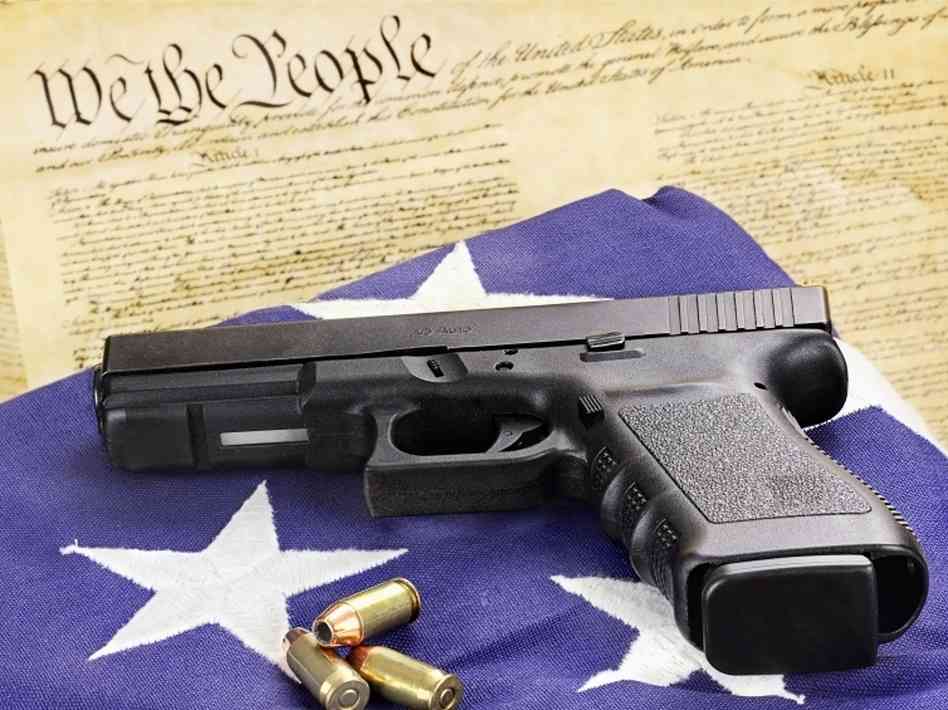
Strict Scrutiny (part four): Exceptions to the 2nd amendment

Constitutional fundamentalists, like religious fundamentalists, yell the loudest when their pet issue is involved.  Suddenly, all compromise and nuances go out the door, because they believe there is One Right Answer and they, and they alone, are wise enough to see what that answer is.

These people will gladly agree to gray areas in other parts of their particular Document That Cannot Be Interpreted (whether their holy book or the Constitution) but don’t you dare misinterpret the intent of (insert one:  God / Founding Fathers) when it comes to (insert one:  abortion / gun control). gun

Many people who read the Constitution so strictly as to never allow any gun control will agree that the 1st amendment, despite being very clearly written, has many exceptions that seem to negate the words “Congress shall make no law abridging Freedom of Speech”.  “It’s all how you interpret ‘abridging,’ they will say.

So let’s look now to the poorly-written 2nd amendment:

A well regulated Militia, being necessary to the security of a free State, the right of the people to keep and bear Arms, shall not be infringed.

That’s the version from the National Archives that just about everyone uses.  But then here’s the version from Thomas Jefferson’s writings — the official version passed by the Senate:

A well regulated militia being necessary to the security of a free state, the right of the people to keep and bear arms shall not be infringed.

Less commas.  But that can make a difference, especially if you are trying to figure out whether the amendment applies to “militia” or “people.”

I am not going to spend this entire post on every nuance of the 2nd amendment because that would take a book.  I advise you to read the first three parts of this current series.  The point of this series is to show that the Constitution is not written in stone, is a result of political compromises, and all parts need to be interpreted.

The 2nd is no exception. It’s not like the rest of the Constitution was written after debates and subject to deals whereas the 2nd was agreed upon by everyone off the bat.

There’s plenty of historical documentation to establish that the 2nd was another one of those Constitutional bits, like the 3/5th clause and other slavery provisions, added because the southern states demanded it. An original version did not use the words “free state” and those words are there for a reason — because the states wanted to make sure they could keep their “militia” which were used to round up escaped slaves. Seriously, there are writings from Patrick Henry and George Mason worried that the northern states, unable to stop slavery, would instead take the guns away from the people keeping the slaves in their place. Whether this was the main reason or not, it still supports my point that the amendment was a compromise.

If you want to be a purist, like many Constitutional fundamentalists claim to be, then I can argue that the Founding Fathers meant only for you to have the right to own guns that could only hold one bullet at a time, took a minute to load, and blew up in your face much of the time. “Of course they didn’t mean that!” they respond. “Ah!” I reply. “So you had to interpret it to include modern firearms.”

The 2nd amendment, just like all of the Constitution, doesn’t mean the same thing it did when it was written. For most of our history, the Supreme Court held that it applied to militia. It was not until the court decided Heller a few years ago that it became an individual right, which countered past history and was strongly objected to by four members of the Supreme Court. (That’s right — one justice made all the difference as to what the Constitution means.) Even still, Heller allowed for regulations of firearms. (That’s the part they forget to tell you most of the time.)

There is nothing magical about anything in the Constitution that leaves it free from interpretation. When I debate the 2nd amendment with Constitutional fundamentalists who believe that the 2nd is written in such a way as to prohibit any gun control whatsoever, the conversation usually goes like this:

“So you don’t think we should keep guns out of the hands of terrorists, criminals, the insane, and children?”

“No, that’s different.”

“Ah! So you agree with me that the amendment is not absolute and there are exceptions! Good. We only disagree on what those exceptions should be.”

I’m not going to spend this post on what I think they should be. My only point is that the amendment is not absolute and is subject to interpretation — just like every other part of the Constitution.

Editorial cartoon of the day

Hawaii joins the 21st Century

Hawaii yesterday became the 15th state to allow gay marriage (including DC).  Or, to put it another way, 36 states continue to deny that gays are “people” entitled to the same rights as everyone else under the 14th amendment.

Illinois looks like it’s about to become the 16th, and apparently is just waiting for the governor to sign the bill.

It’s sad that we have to wait for states to vote to give these rights, but you also have to admit that this particular civil rights movement is changing fast and there’s no denying that it will ultimately be successful.

So here’s for a day of good news.

Editorial cartoon of the day

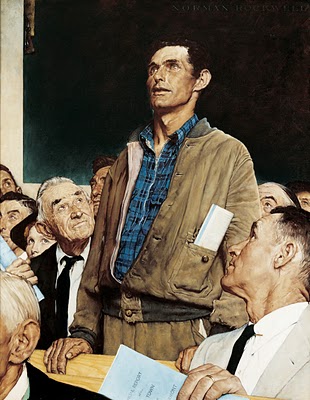
Strict Scrutiny (part three): 1st Amendment Exceptions

The 1st Amendment is written about as clear and concise as can be.  No exceptions are provided:

Congress shall make no law respecting an establishment of religion, or prohibiting the free exercise thereof; or abridging the freedom of speech, or of the press; or the right of the people peaceably to assemble, and to petition the Government for a redress of grievances.

That’s five really important rights all tucked into one small sentence. Freedom of Speech Freedom to establish a religion;  freedom to exercise your religion;  freedom of speech;  freedom of the press;  freedom to protest.

Constitutional fundamentalists read the Constitution strictly and argue that one must never interpret the document or read something into it that isn’t there.

Let’s take Freedom of Speech as an example.  Clear as day, right?  No interpretation needed.  No exceptions are allowed.

Here’s where we pause for laughter.

There are lots of exceptions to your right to free speech, and these are exceptions that just about everyone will agree are a good idea.  Most of these exceptions existed when the Constitution was written.  For example:

Time, Place, and Manner.  Your right to speech can be limited as to when and how you can exercise it.  You can’t stand in the middle of a courtroom during a trial and give a speech about taxation.  You can’t have a rally at 3 am using loudspeakers.  You can’t disrupt a military funeral claiming that “God hates fags.”  The time, place, and manner of your speech can be regulated.

Clear and Present Danger.  You have the right to speak out against the government, but if you’re inciting a riot, you can be stopped and you can’t claim they are violating your right to speak.  (It’s not the speech they are stopping, after all, it’s the violence you are encouraging.)

Defamation.  Libel and slander are not protected.  You cannot commit these crimes and then claim, in your defense, that the 1st amendment protects you.

Obscenity.  Obscene works are not protected, although there are very few cases about obscenity these days because of the proliferation of adult websites.  Still, the exception is there.  This is different from Child Pornography.  Things that would not be considered obscene if it involved adults would still be prohibited if children are involved.   In a sense, when you are convicted of child pornography, it’s because you are conspiring in the assault on the child.  (That’s the key — artwork featuring children is not prohibited, for instance, although I certainly wouldn’t want to have anything to do with you if that was the kind of thing you enjoyed.)

Commercial speech.  Advertisements can be regulated.  You can be punished for making false claims about your product and you can’t claim in your defense that your 1st amendment rights were violated.

Reasonable governmental interests.  You can’t reveal government secrets that would place our agents or troops in danger.  You don’t have absolute freedom to publish whatever you want in a school newspaper.  Radio and television airwaves can be regulated.  If you’re a government employee, you may be limited in what you can say about politics.  Your speech can be limited when you are in the military or in jail.  The government can restrict what lawyers can say.  (Seriously, we can be punished for violating our ethical requirements by revealing confidential information, for instance.)

Anyway, I could spend an entire semester on these exceptions (and did, when I was in law school).

And this is just for the Freedom of Speech part of the 1st Amendment.  I haven’t even mentioned the other rights in the 1st, all of which have exceptions.

“But wait,” you say.  “What about governmental secrets that don’t place anyone in danger, like in Snowden’s case?  What about restrictions on time, place and manner that are unreasonable?  What if I disagree with the government as to what is obscene?”

Aha.  Now you see why we need courts and lawyers.  Every case is different, and there are many shades of gray in the law.  What applies in one case may not in the next.

And that is why you must laugh at any Constitutional fundamentalist who proclaims that there is one right answer for every circumstance and that the Constitution does not need any interpretation.

Part four next:  If there are this many exceptions to just one part of the clearly-worded 1st amendment, why can’t there be exceptions to the poorly-worded 2nd amendment (especially since it’s the only amendment that contains the words “well-regulated”?)

Click here to read part one and start at the beginning.
 

Editorial cartoon of the day