Strict Scrutiny (part two): Constitutional Compromises

The Constitution is a series of compromises, and not a document of Wisdom Handed Down from Our Elders.

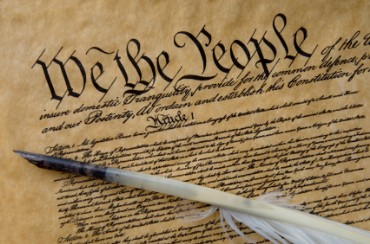
In order to get the Constitution ratified, certain concessions had to be made.  In part one, I mentioned how many parts were written purposely vague because that was the only way to get agreement on them. Let’s now look at some more clear-cut examples.constitution_quill_pen
The most obvious may be “The Virginia Compromise.” (Look, it even has “compromise” in its name.) The smaller states wanted each state to have an equal vote so that they wouldn’t be ignored. The larger states wanted it to be based on population which would obviously benefit them. In the end, we got both — a Senate where each state gets the same representation no matter how small, and a House where the states with more people get more representation.

Then there are the first ten amendments themselves (the “Bill of Rights”). Many states refused to ratify the Constitution without these protections, and it’s a good thing they demanded them.

But the clearest example of compromise in the Constitution has to do with slavery. Most of the northern states had already abolished it and wanted the entire country to do the same, but the southern states refused. The south was worried that as soon as this Constitution was passed, the northern states would outlaw slavery completely. Without some provisions to prevent this, the south refused to agree to the Constitution.

Rather than split the country within the first ten years of its existence, a series of compromises were worked out. (Sadly, postponing this only led to the bloodiest war in American history a hundred years later.)

First, there’s Article I section 9 which specifically prohibited Congress from passing any law outlawing the importing of slaves before 1808 (twenty years from the Constitution’s signing). Why 1808? Was there something magical about that year? No, that was just the number that compromise produced. (And as soon as 1808 came about, Congress did exactly what the south was worried about and banished the importation of any more slaves.)

Second, there’s the ridiculous 3/5ths clause. The south demanded that when determining how many representatives they would get in the House, that slaves should be counted as “people” even when they were property in every other respect under the law. The north rightly pointed out how stupid this was, but the south insisted and there was another compromise made. We ended up with a provision that held that 3/5ths of every slave would count. No mention as to which 3/5th of the slave counted, though, but apparently it didn’t include the head since the views of the slaves mattered not.

Third, there’s the 2nd Amendment, which allowed the southern states to keep their state “militias” which were basically armed gangs whose only job it was to intimidate slaves and capture ones who escaped. (More on this later.)

So whenever some Constitutional fundamentalist tries to argue with you that the Constitution is concise and “the will of the Founders,” just point out how many compromises there are in it, thus clearly indicating that there is no “will of the Founders.” It’s all agreements and compromises needed to get the thing passed.

Next: A clear, exact 1st Amendment which doesn’t provide for any exceptions, and then all the exceptions there are to it.

Editorial cartoon of the day

Strict Scrutiny (part one): Constitution Fundamentalists

There are religious fundamentalists out there who are convinced that they know exactly what the Bible says.  They take it absolutely literally and have no doubt in their mind what it all means, and anyone who disagrees with their interpretation is simply wrong.  And, amazingly, what the Bible says matches their own personal views perfectly!

There are Constitutional fundamentalists who have the same view — they treat the Constitution like it was written on stone tablets and handed down by the gods.  Sadly, at least one of these fundamentalists is on the Supreme Court.

The problem with this simplistic view is that it fails to take into consideration Constitutional history and common sense.  The Constitution was written by men, not gods, and they did not all agree on the meaning of the words or what should be in there.  constitution_quill_penThere is no more of a “founder’s intent” than there is a government intent on any bill.  Will people years from now claim that the entire Congress agreed unanimously on Obamacare?  Of course not.  So why do people insist on believing that for the Constitution?

The Constitution is a series of compromises, just like everything done by government.   It was written very broadly, with purposely vague words, because that was the only way it could get passed.  It’s meant to be our guidelines for how the laws will be written — our goals, if you will.  It was not meant to be taken literally to the point where there is only one interpretation.

Those who say that there is just one way to interpret it need to explain why, within a few years, there were Supreme Court decisions about it.  These were the exact same people who wrote the damn thing — why would they need to go to court to have someone explain it to them?

One of the first and most important Supreme Court decisions in those early years was Marbury v. Madison, in which the Supreme Court said that they have the right to review laws to determine whether they were Constitutional.  Makes sense, right?  Who else would do that?  But those words aren’t anywhere in the Constitution.  The founding fathers had to interpret them from the overall document.  And clearly, not everyone agreed.  And these were the people who wrote it!

After all, if everyone agreed on the meaning, there would be no need for a Supreme Court at all.

You’d think people would get that, but Constitutional fundamentalists (who, like religious fundamentalists, are always very conservative) cannot accept this.  Justice Scalia, for instance, chides his fellow Justices all the time for getting it “wrong” when they refuse to acknowledge he has super powers to read the minds of the Founding Fathers and know exactly, for instance, what their views were on internet regulations.

Part two:  Examples of compromises made by the Founders

Editorial cartoon of the day

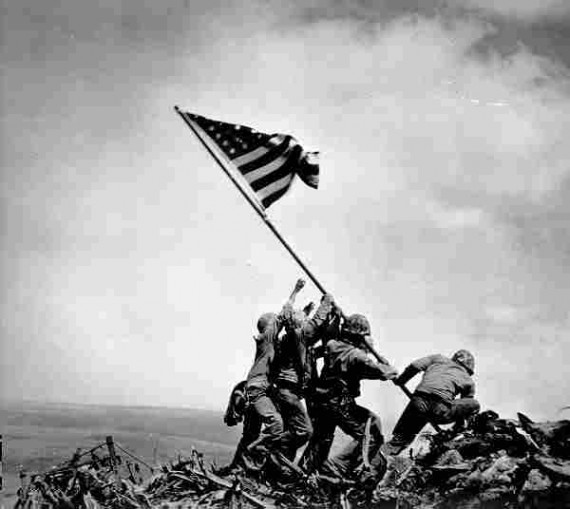
Thanks to all veterans and military personnel

Nothing sarcastic or political today;  just a heartfelt thanks for doing a job I could never do. Veterans-day-e1289486232769

The draft ended before I turned 18. By the time young men had to register, I was too old. I am fortunate in that — I don’t think I could handle combat. I always imagined that if I were drafted, I would end up as the kind of soldier who sat behind a desk and did menial work, like Radar O’Reilly.

My father was drafted into the army just as World War II was ending.  He spent the next four years never leaving America, enjoying peacetime, for which I am obviously grateful.   As a child of immigrants, he demonstrated to me the glory of America — that within one generation, one could stop being an Italian and instead become an American.

So thanks to all who serve and have served.


Editorial cartoon of the day

Editorial cartoon of the day

I’m an elected politician

On Tuesday I ran a last minute write in campaign for Judge of Elections for my precinct, and the official results have me as the winner.

The Judge of Elections is the person who makes sure the machines work properly, guarantees that everyone gets to vote who is eligible, and otherwise keeps everything running smoothly on election day.

I attribute my electoral success to three factors:

1. A presence at the polls (thanks to Mark Dodel who stood in for a few hours) making that personal touch;

2. A desire to elect new people to replace the old; and

3. No one else was running.

It’s only a matter of time until the Governor takes note of me and appoints me to the US Senate.

Editorial cartoon of the day

Benghazi “facts” not true says CBS

In a scene foreshadowed on Sorkin’s “Newsroom”, CBS has admitted that the source they used for their Benghazi report was bad, and apologized for reporting false information.

Well, this should stop all those critics who used the report to claim that there was a scandal here.

Ha ha! Just kidding. We all know that facts don’t mean anything to Obama critics.