1. It will make every vote count. I grew up in Virginia which, at the time, was reliably Republican. My vote meant little in the Presidential race. Then I moved to Massachusetts and later New York where my Republican friends’ votes were meaningless.
That’s ridiculous. With the winner-take-all elections we have now, people who are in the minority party in their states have no real reason to come out and vote.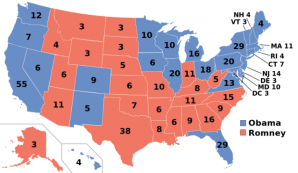
By having a popular vote for the President, every vote will count. Democrats in Utah and Republicans in Hawaii won’t feel their votes are wasted.
2. It will force candidates to campaign everywhere. Right now, there are states that rarely see a political campaign, where the candidate visits only to raise money and then disappears. The candidates also pay an inordinate amount of attention to whatever issues are important to those states that are in play, even if those issues would hurt the rest of the country. (Admittedly, some of that will still go on with our current primary system.)
Getting rid of the electoral college means a vote is a vote, no matter where it is. A vote in Idaho is meaningless to a Democratic candidate now, but it would be worth just as much as one in a swing state if we get rid of the electoral college.
3. It will help get people in those non-swing states involved. It should increase voter participation, and even help the local economy.
4. It will get rid of “red states” and “blue states.” This concept does nothing to help political discourse, and only divides us more.
5. It will make it clear that the President represents the people, not the states. And, more importantly, all the people, not just the ones in the states that elected him.
Right now, a President can lose the election and still win. That has happened three times in our history, most recently when Gore got more popular votes than Bush yet Bush won the electoral college. We ended up with a guy a majority of Americans voted against. How is that democracy? That’s winning by a loophole. And it could easily happen again.
(EDIT: Be sure to read the very extensive debate on this topic in the comments!)
(EDIT #2: Obviously, this was written before the 2016 election, so now we have two examples of a candidate winning the popular vote and losing the election within a period of 16 years.)
(EDIT #3: If you’re really interested in this topic, I dedicated an entire chapter to it in my book HOW TO ARGUE THE CONSTITUTION WITH A CONSERVATIVE.)


 ventrellaquest.com