Understanding your ground

Our legal system is the best there is, but it isn’t perfect. Innocent people get found guilty all the time, and guilty people get found not guilty (which, technically, is not the same thing as being found innocent). I’ve won cases I was sure I’d lose and lost cases I was sure I’d win, and sometimes after a verdict both the DA and I scratch our heads and wonder what the jury was thinking.

That’s why I always advise my clients to take deals when they don’t want to gamble with a trial. That’s also the main reason I’m against the death penalty (I don’t believe there should be a 100% irreversible penalty when our system is not 100% perfect).

The Zimmerman trial is the latest example. The verdict doesn’t make sense to me, but hey, sometimes I just scratch my head. For some reason, those jurors were not convinced beyond a reasonable doubt. Another jury watching the same trial could have found the exact opposite. That’s how the system works.

As people point out, this case was all about self-defense. I won a huge self-defense case last year, but the laws here in Pennsylvania are different. We don’t have a “stand your ground” law which is popular in those “wild west” types of states that want people to be able to do things that only trained police officers do elsewhere.

Self-defense laws in most states hold that you must retreat from the fight if at all possible and if you do fight back, you cannot give more force back than is necessary. Florida’s law, apparently, is “if someone is giving you some bruises, you can kill them. Especially if they’re armed with skittles.”

I’m not even sure exactly how the prosecution and the judge allowed Zimmerman to use the “stand your ground” defense. Zimmerman was the one stalking Martin, right? He’s the one who started the fight and came to it with a loaded gun. If it hadn’t been for Zimmerman’s aggression, there wouldn’t have been a fight and Martin would still be alive. Martin was the one standing his ground.

But, you know, people are murdered every day. The vast majority of these cases never make the news, and I’m sure there have been some miscarriages of justice in these cases too, hidden from the scrutiny of the press.

The bottom line is this: I’m a defense attorney and I can’t figure this verdict out. I mean, it seemed black and white to me.

Hey! Maybe that’s the reason!
Pa. AG refuses to support unconstitutional law

When Kathleen Kane was elected Attorney General here in Pennsylvania, I cheered — we haven’t had a Democratic AG in, well, forever it seems. Surely things would change.

I’m happy to report that they have.

The ACLU recently sued Pennsylvania (and some other states) over the gay marriage ban. Our Attorney General has announced that she will not defend a law she believes is unconstitutional. “If there is a law that I feel that does not conform with the Pennsylvania state constitution and the U.S. Constitution, then I ethically cannot do that as a lawyer,” she said.

It’s not like the law won’t be defended; our conservative governor vows to fight this and he has a legal staff to do so. He’s also, based on current polls, the most unpopular governor in the country, and I can only imagine this will hurt him even more in a state that has a majority of the population supporting gay marriage.

Chances are, nothing will happen here in Pennsylvania since we have a Republican-dominated Supreme Court. (One Republican Justice was recently removed — that happens when you get convicted of a felony — but she was replaced by someone almost as bad). So chances are this will move through the courts and get combined with the cases from the other states to later get before the US Supreme Court.

Still, it’s a step in the right direction, and it’s nice to know we have an Attorney General who has ethics.

It’s all Libel and Slander

It is tremendously hard to sue for defamation. And that’s a good thing.

Every once in a while, I’ll get someone calling my office wanting to sue someone because they were called a bad name or something, and I have to explain to them how the laws work in America.defamation

Defamation includes libel (written) and slander (spoken). In order to win a case, I’d have to prove three things:

First, that the statement was false. This is usually the easiest thing to prove, but sometimes the thing being said is merely an opinion. “Joe is a jerk” is not true or false. “Joe is a pedophile” is a lie.

But there’s even more to it than that — you have to show that the person who made the statement knew that it was false. If they said it thinking that it was true, then that’s a defense. (Truth is always a defense against libel and slander).

And if the person who wrote or said this was a reporter, then you also have to show that they knew it was not true and they had “malicious intent” in spreading it.

That’s a tough standard — but even if you meet that, you still have two other burdens to overcome.

So the second thing is to show that other people believed it. If someone calls you a martian, then that’s clearly a lie. But if no one believes them, then what’s the point? The lie has to be believed by others.

And finally, you have to show that you were seriously harmed in some way and not just insulted. You need to show that because of the lie, you lost your job and people are throwing bricks at your house and spitting on you as you walk down the street. You have to prove damage.

So if someone says “Joe is gay” and it’s not true and the person who said it knows that it’s not true, you’ve met the first burden. If everyone believes it, then you’ve met the second burden. But if no one cares and you aren’t harmed in the slightest other than perhaps being upset or embarrassed or insulted, then you have no case.

So the next time someone says they want to sue for defamation and then complain that no lawyer will take the case, you’ll understand why.

The Citizen’s Grand Jury

Oh, no! Look! A Citizen’s Grand Jury has indicted the lead prosecutor in the Zimmerman trial! This is serious, as some people have pointed out on the interwebs. It could throw the whole trial into chaos!

Those “citizen grand juries” are powerful things, you know. Remember the “citizen’s grand jury” that indicted George W. Bush for war crimes? He’s never lived that down. Then there was the “citizen’s grand jury” that concluded that 9/11 was an inside job, and the “citizen’s grand jury” that determined that Obama’s birth certificate was a forgery, and of course, the “citizen’s grand jury” that was formed by a bunch of white supremacists that indicted a bunch of liberals who were keepin’ the white man down.

Yep, those “citizen’s grand juries” are serious things.

Hey! I have an idea! Why don’t we all get together and start our own “citizen’s grand jury” and indict someone! Come on, it’ll be fun!

The Most Powerful Man in America

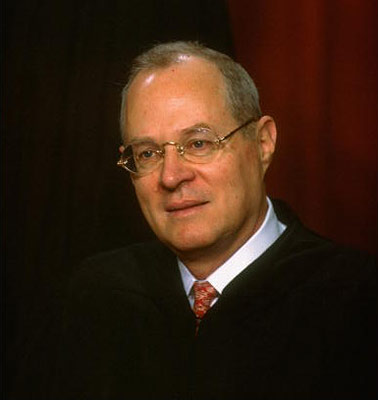
Ladies and Gentlemen, ken0-009may I present to you…

The Most Powerful Man in America, Justice Anthony Kennedy!

Kennedy’s presence on the Supreme Court as the one reliable “swing vote” between the liberals and conservatives means that it is he, and he alone, that has often made the difference between hugely important cases. Don’t believe me? His vote was the deciding one on:

  • The Unconstitutionality of DOMA
  • The right of the Boy Scouts to discriminate
  • The right of prisoners in Gitmo to habeas corpus hearings
  • The right of police to take DNA samples
  • The right of corporations to spend unlimited money in political campaigns (Citizens United)

Editorial cartoon of the day

Note: this was first posted last March, long before the decision became public. Like anyone was surprised by Scalia’s opinion.

The Voting Whites Act

I was thinking all day about what I’d say about this latest Supreme Court decision … but couldn’t say it any better than Justice Ginsburg’s dissent, which was so biting that it caused Justice Alito to roll his eyes (because, you know, women! What do they know about the law, am I right, guys?).

supremes

“Just as buildings in California have a greater need to be earthquake­ proofed, places where there is greater racial polarization in voting have a greater need for prophylactic measures to prevent purposeful race discrimination,” she wrote.

“Congress approached the 2006 reauthorization of the VRA with great care and seriousness. The same cannot be said of the Court’s opinion today. The Court makes no genuine attempt to engage with the massive legislative record that Congress assembled. Instead, it relies on increases in voter registration and turnout as if that were the whole story. Without even identifying a standard of review, the Court dismissively brushes off arguments based on ‘data from the record’ … One would expect more from an opinion striking at the heart of the Nation’s signal piece of civil-rights legislation.”

She then listed many many examples of how the law had been used just in recent history to prevent discrimination, thus proving that it is needed.

Basically, the majority did what conservatives call “judicial activism” which they claim to hate (except when they don’t). This was a law that had been held Constitutional previously, and (as Ginsburg points out) was a re-enactment of an already existing law. The majority ignored the many examples Congress gave when it passed the law, and instead imposed its will over the elected officials and decided we didn’t need the law. That’s not what the Court is supposed to do.

What the majority said, when you boil it down, was “We agree there is still discrimination, but we don’t care.”

So now the floodgates are open. If you think Republicans had been trying to keep people from voting in the past, you haven’t seen anything yet.

Negative Affirmative Action

The Supreme Court today sent an affirmative action case concerning college admissions to the lower court to have them use the proper legal standards, so there’s no real decision — but when I discuss these kinds of cases with people, I am often surprised at how misunderstood affirmative action is.

Affirmative action began as a way to fix discrimination where it needed to be fixed. Imagine a factory in an area that is 50% minority. If the jobs in the factory required no experience, you’d expect 50% of the employees to be minorities, wouldn’t you? Just based on statistics. Well, of course that wasn’t always the case, especially in the 60s and 70s when affirmative action began. You’d have these places with 10% minority workers.

So what would happen is that the factory would have to explain themselves. If, for instance, they could show that of the job applications they received, only 10% were from minorities then perhaps that could explain it. But that usually didn’t happen. And so the factory was made to have a policy of accepting minorities to get to where they should have been had there been no discrimination.

Note: this never required you to hire someone who was not qualified. Never. Yet people who scream about “reverse discrimination” always try to give anecdotal examples of where that happened.

Most of the recent cases involve colleges, where there is a different objective. Colleges want to have a diverse student body. They like to get students from all over the country and all over the world, with different religions and beliefs and backgrounds and races. They also look to get people with different experiences and people who were leaders in their community.

It’s how you get a real education. Real education comes from getting lots of different viewpoints and not being in a room where everyone thinks exactly the same. (As an aside, I taught a Constitutional Law class for a semester at Curry College in Massachusetts back in the ’90s — the entire class was full of rich, spoiled white kids and I couldn’t get a good debate going no matter what the issue. It was terrible.)

Lawsuits such as the one the Supreme Court had today come from white kids who got better SAT scores but yet didn’t get in while a minority student whose scores weren’t so good did.

Are SAT scores everything? Do they predict future success? No, and all educators know that. They are an indication, but that’s just one of many factors to consider when accepting students. (Some schools now don’t even consider SATs when accepting students.)

Yet people scream “reverse discrimination” and only look at race when a minority person gets in over a white person. (For all you know, the minority applicant was an Eagle Scout who was High School President, plays a musical instrument, knows three languages, but tests poorly.)

And now we get back to the main point again — qualifications. Even if the minority student is not as qualified as the white student, he or she is still qualified. They’ve met the minimum requirement to get in, and once in, they will have to take the same tests and do as well as every other student or they will fail.

Silence is Guilt

I have always given this advice to all my clients (and anyone willing to listen): If there is any chance you might be a suspect, even if it’s not true, do not talk to the police. There is nothing you can say that will make things better. Their job is to get you to confess or at least say things that can be used against you. That makes their job so much easier later. The only exception is if you have an air-tight alibi (“I was in Europe the last three months and here’s my passport to prove it.”)

Well, I’m not sure what to advise them now. The Supreme Court yesterday ruled that silence can be used against you, too.shut-up

According to this decision, the District Attorney is allowed to argue to the jury that your silence can be interpreted as a sign of guilt.

Conservatives everywhere are thrilled with this new interpretation of the 5th Amendment — an interpretation which wholly new and not supported by any documentation from the Founding Fathers whose “intent” they always say should follow. Apparently, every Amendment has exceptions (except, of course, for the 2nd.)

This, by the way, is a great example of “judicial activism” wherein the judges write laws and change the meanings of long-established precedent. You know how much conservatives hate judicial activism. Well, unless they agree with the result.

My only hope is that some states (such as Pennsylvania, where I practice) will negate the decision. After all, a state can always give more rights than the bare minimum required by the Constitution.

Patriot Act Hypocrites

When it comes to the Patriot Act, there are just too many hypocrites to deal with.

The Patriot Act allows the NSA to listen to phone conversations and emails for certain key words, at which time they can get a subpoena to get all the records (a subpoena which has never been denied by the court — great oversight, huh?). It certainly appears to be a complete violation of the 4th Amendment to me and many Constitutional scholars, but until the Supreme Court says so, it’s the law and allowed.

For some reason, this is now a big issue, even though it’s been going on for about ten years. This has brought out a gaggle of hypocrites.

First, you have the ones on the right, who defended George W. Bush when he did this but call Obama’s use of the same law a gross violation of their rights. (These pundits and politicians, centered mostly at Fox News, are part of the same gang that said criticizing GWB during wartime was “treason” but doing the same to Obama during wartime is their patriotic duty.)

The clip below is a great example, showing Fox’s Sean Hannity’s position flipping 180 degrees based on whether this was done by a President Fox supported or one they oppose.

But this is not limited to the right. There are hypocrites on the left as well (though not as many) who opposed this under Bush but approve it under Obama.

The biggest hypocrite on the left is Obama himself. He’s ignored his campaign promises in this regard.

His view is apparently that he is against the abuse that can come from the Patriot Act — but doesn’t see that he is abusing it. In other words, he thinks “In the hands of a bad President, this would be a huge violation of our rights, but I’m not a bad President, and I have used it for good.” I think he is feeling some guilt over this and has recently began to talk about getting rid of it (again) because he is worried about who might hold that office after him.

So he doesn’t see himself as a hypocrite; he sees his position as changed based on the circumstances. How very convenient for him.

The good news is that there are those on both the right and the left who have been consistent in their views on this issue, and they should be congratulated and acknowledged.