“You must pledge to support the laws of this land that I don’t agree with!”

Here we go again.

Another teacher is in trouble for demanding that a student participate in reciting the Pledge of Allegiance, but this time it’s the teacher’s response that makes me giggle.

The student refused because the pledge contains the words “Under God” and stated (correctly) that it is illegal to force someone to say the pledge. The teacher replied, “I don’t care about the law.”

The Justice League saying the Pledge of Allegiance from a comic book in the 40s. Notice something missing?

The Justice League saying the Pledge of Allegiance from a comic book in the 40s. Notice something missing?

Got it? The teacher wants to teach respect to our country and wants everyone to pledge allegiance to that country while at the same time ignoring the very laws of that country.

The teacher then called her “disrespectful.” Let’s see — which one said that people should ignore the laws of this country? Was it the student?

Such a patriotic attitude this teacher has! (Insert comic German accent) “You vill obey und salute the government. Ve do not allow individual thought here!”

This is America — where we don’t force people to love the government. After all, of what use is a forced pledge? If someone forces you to say something against your will, what’s the point? How is it meaningful? Does the irony not hit people? “We are forcing you to pledge against your will — for freedom!!!”

The United States Supreme Court held that no one could be forced to say the pledge over fifty years ago in a case involving the Jehovah’s Witnesses, who persuasively argued that such a pledge violated their religious beliefs concerning worshiping objects or something.

I am always amused by patriots who want to force Americans to do things like this — which seem to me to be one of the most unAmerican thing you can do. Say the pledge because you mean it, and not because you have to. That’s true patriotism.

Much of the debate against the pledge would be neutralized if we could just remove the “under God” part that was added in the 50s. (I personally just remain silent whenever it comes to those words.) Wouldn’t it be nice to have a pledge that includes all Americans? Isn’t that what America is supposed to be about?

Nothing Civil About this Disobedience

by Guest Blogger Michael Strauss

The United States has a proud tradition of civil disobedience. And this tradition is one that is heralded by those on both the right (Boston Tea Party, Cliven Bundy) and left (Ferguson, Baltimore). Once again the cry and hue for civil disobedience is being raised, this time primarily by Republican legislators and elected officials, in response to the Supreme Court ruling in Obergefell v. Hodges (legalizing gay marriage nationally).

But this raises a rather simple question: Is this actually civil disobedience?

As an old friend stated, there seems to be nothing civil about this disobedience. And while it was meant as a humorous quip, it is also rather on the nose as well.

First and foremost, civil disobedience, at its core, is still disobedience. When you disobey the law, no matter your reasons, you are punished for that disobedience. That is the side of civil disobedience we always seem to conveniently forget.
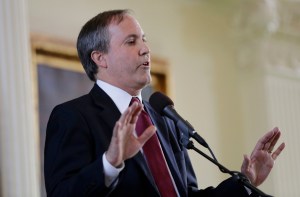
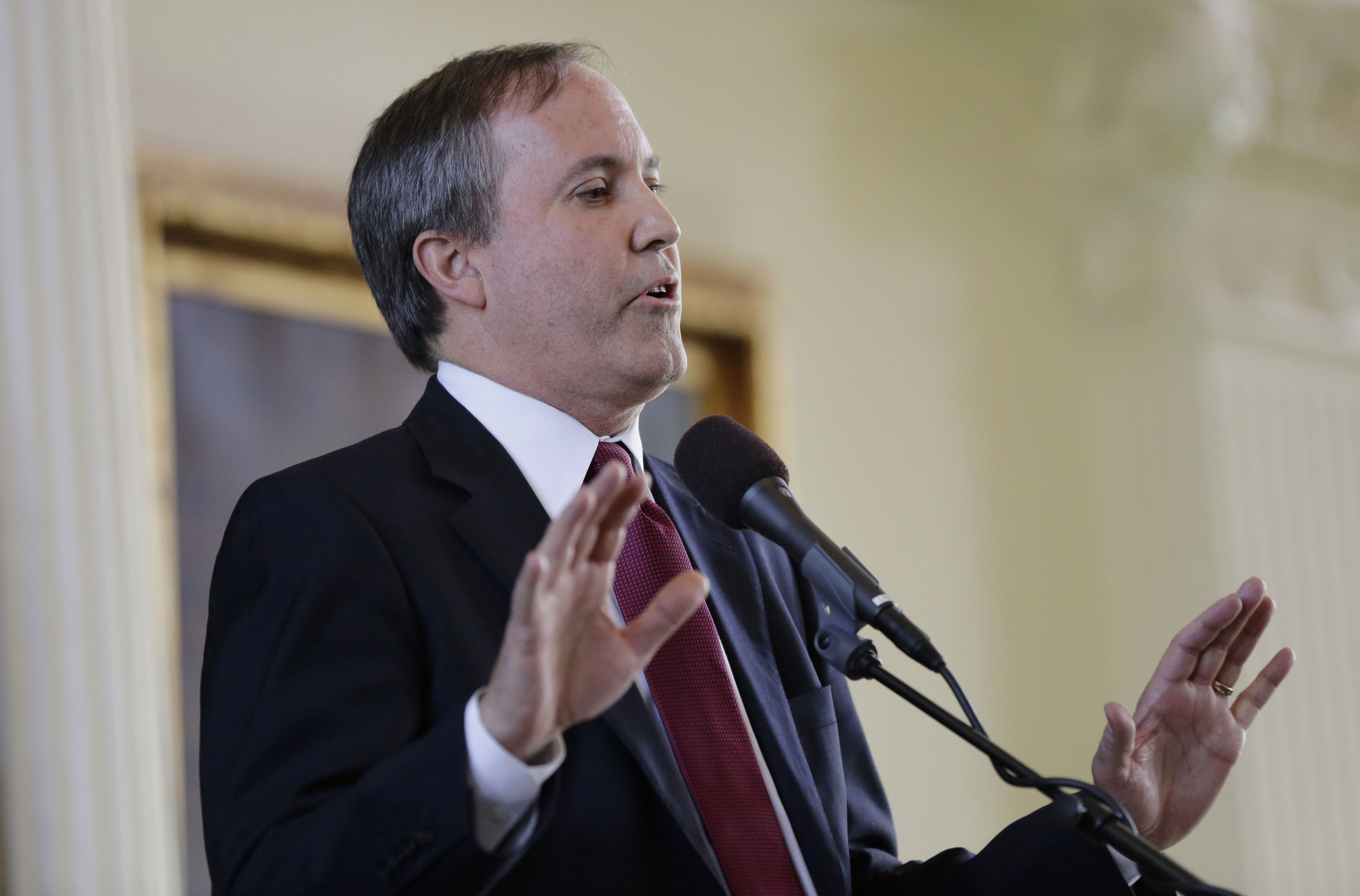
Texas AG Ken Paxton ignores the oath he took to uphold the Constitution

Texas AG Ken Paxton ignores the oath he took to uphold the Constitution

Despite the fact that he was one of the most peaceful men ever born, Martin Luther King Jr. was arrested 30 times for civil disobedience. He understood he would be arrested. In fact, mass arrests were literally part of his plan for building publicity for his movement. He never struggled against those arrests and actually refused to accept bail in some cases, in order to show support for his cause.

MLK understood that part of civil disobedience means that you accept your punishment willingly. That is why, no matter how much liberals applauded Bree Newsome (the woman who scaled the flagpole at the SC capitol and removed the Confederate flag), it is right and appropriate that she was arrested and will be tried. If she truly believes in her cause, she should plead guilty.

And then there is Ken Paxton. Ken Paxton would have you believe that he is following in the footsteps of MLK with his civil disobedience against the Supreme Court ruling, but his isn’t. Even if you accept his rather flimsy argument that he is fighting for the rights of religious Americans (that for some reason always seem to be Christians, despite the fact that both Jews and Muslims are likely to hold the same beliefs on “traditional marriage”), rather than against the rights of non-heterosexual Americans, he still isn’t engaging in civil disobedience.

Unlike MLK or Newsome or those patriots in 1773, he simply is unwilling to suffer the penalty for his disobedience. Just the opposite. He explicitly told the clerks and probate judges of Texas that they would have to suffer for obeying his order to invoke religious liberty, in direct violation of the Supreme Court ruling, but that he would be safe in his Ivory Tower. That isn’t civil disobedience. That is simply an abuse of power.

Which brings us to the second reason that Paxton and Abbott and Jindal (and any other elected or appointed official following this path) isn’t engaging in civil disobedience. As my old friend said, there is nothing civil about it. The word “civil” is a reference to Joe or Jane Q. Public. Martin Luther King Jr., the Tea Party patriots, Bree Newsome, Susan B. Anthony and even Cliven Bundy all share a common trait. None of them wielded direct legislative, judicial, or executive power.

Unlike Jane and Joe Q. Public, government officials have legal power and tools to try to change laws. Even Supreme Court rulings can be overruled (the Dred Scott decision is no longer the law of the land). The process may be ponderous, but those tools are available to people at pretty much every level of government, especially to state governors. The average citizen doesn’t have those tools or power, which is why they engage in civil disobedience. Anyone who uses power invested in them to violate the law is simply being a fascist dictator.

If Ken Paxton truly wishes to engage in civil disobedience, then he needs to follow the example of Linda Barnette, the woman who quit her job as a Grenada county clerk rather than issue marriage licenses to non-heterosexual couples. Whether you agree with her stance or not, her decision is a shining example of the correct way to object to this Supreme Court decision. Linda Barnette, a simple county clerk, made a principled, legal stand for her beliefs.

Why are Paxton and Jindal incapable of following her example?

Michael is a New Jersey native that somehow landed in Pittsburgh.  He is a writer by trade and an amateur political commentator by choice.  He enjoys tweaking the noses of liberals and conservatives alike.
Nebraska gets rid of the death penalty

Nebraska just became the 19th state to get rid of the death penalty.

This is notable for two big reasons. First, Nebraska is not known as a hotbed of liberal views. Second: this was done by the legislature and not by one governor declaring that there would be no more death penalty in his state (like Pennsylvania’s new Governor Wolf did soon after taking office). And it wasn’t just a simple majority vote — The legislature passed this with enough votes to override a veto.death

More and more, people are realizing that it is time America joined the rest of the civilized world in getting rid of uncivilized punishment.

There is absolutely no doubt that innocent people have been killed by this penalty. Those who insist on keeping it are basically saying they don’t care — that it’s better to kill one innocent person than it is to imprison a guilty one for the rest of his life.

Our system of justice is not perfect. Until we have a system that is 100% free from error we should not have a penalty that is 100% irreversible.

Right now, America shares the death penalty with such great democracies as China, Iran, North Korea, Pakistan, and Sudan. It’s time we distanced ourselves from the bad guys.

Why plea bargains serve justice

A while ago, I had two jury trials scheduled in a row. The same District Attorney was handling both cases. We met before the trials to work out last minute details and we both admitted that I would probably win the first case and he would probably win the second one.

The exact opposite happened.

The lesson is this: You never know what a jury will do. Many times a trial has ended with a result that has both sides (and the judge) scratching their heads wondering what happened. justiceGuilty people have gone free and innocent people have been convicted. Our system of justice may be one of the best in the world, but it’s not perfect, because human beings are involved.

And that’s why we like plea bargains.

Here’s a more recent example. My client was charged with a number of serious felonies. The only evidence against him was the word of the alleged victim, and I believed that testimony would not be enough to convict him (especially since he would also be testifying and I had other witnesses that would challenge the victim’s testimony). I honestly believed my client to be innocent of the charge. If we went to trial, I fully expected to win.

But I could not guarantee it.

So I spent a lot of time negotiating with the District Attorney. His job is to protect society and this witness wanted to testify and bring charges. If a jury believed her, then justice would be done. He knew he didn’t have the strongest case and he knew he would probably lose but he also could not guarantee it.

So we tried to work it out. It was better for both of us to get something than to risk it with a jury.

Because I knew I had a good case, I was able to get a very good deal for my client. Instead of facing years in prison with a felony charge, he entered a “nolo contendre” plea (meaning he didn’t technically admit guilt but instead admitted that the DA could prove his case) to a minor charge with an agreement to place him on probation for one year.

The same thing happens when I have a bad case. Even if it’s clear that my client is guilty, there’s still no guarantee that the DA will win at trial. After all, besides the worry about juries doing unexpected things, sometimes other surprises happen during a trial — witnesses change their story or don’t show up, evidence and testimony is challenged, something else goes wrong — so the DA has the same thoughts I had in the example above: I will probably win, but what if I don’t? It’s better to get the guy found guilty of something than to risk him going free completely. In cases like that, I can usually work out a deal for my client, although since the odds favor the DA he won’t give up too much and thus he ends up with the better deal.

The only time you really go to trial is when you can’t work out a reasonable deal — when it’s better to take your chances with a jury because even if you lose, you won’t be that much more worse off than what the DA offered. (You also go to trial if the client insists even knowing the odds — it’s always the client’s choice whether to take a deal or not.)

So when people say that plea bargaining is bad or that it subverts justice, they’re wrong. You never hear anyone who actually does this for a living say that. The DA asks for something way over there, I ask for something way over here, and when we compromise somewhere in the middle — well, that’s probably as close to justice as we are going to get.


Veto perspective

“Obama is a dictator” they scream once again, this time because he has vetoed the Keystone pipeline, which a majority of Americans don’t want but the Koch Brothers do (and we all know who the Republicans listen to).  Vetoes, as we know, are a complete sign of dictatorship even though they are specifically provided for in the Constitution.  Strange that.

Here is where I point out the number of vetoes Obama has used in his term and compare that with those of his predecessors.  Come on, you knew that was coming:

  • Obama:  3
  • GW Bush: 12
  • Clinton:  37veto
  • GHW Bush: 44
  • Reagan:  78
  • Carter:  31
  • Ford:  66
  • Nixon:  43
  • Johnson:  30
  • Kennedy:  21
  • Eisenhower:  181

This looks a lot like that chart showing how Obama has used less Executive Orders since Grover Cleveland, doesn’t it?

Admittedly, Obama hasn’t had to use as many vetoes over the years, but that’s mostly because this has been the Congress that has passed the least amount of bills ever.


Marijuana is not good for you

Yes, of course it should be legal. Just stop pretending that smoking a marijuana cigarette is good for your health.

The pro-marijuana lobby has been pretty successful lately, and I am happy for that.  It makes no sense that marijuana is still illegal in most places while alcohol is legal. marijuana-mapAnd in Colorado (for instance), legalization has been quite successful financially, both in the income it produces through taxes as well as the money saved from having less crowded jails and courthouses.

But geez, stop claiming that smoking it is good for you.

My wife (the award-winning artist) is a cancer survivor. She lost much of the use of her right arm due to a very rare desmoid tumor. She can only work for a few hours a day before the pain is too much for her. She is on constant medication and often has to use a machine to massage her arm because of her lymphoma.

Do I believe marijuana would make her feel better to help the pain? Sure, of course. Just like wine does for her now.

But a glass of wine a day really isn’t that bad for you. It may even be good. Alcohol is only bad when it is abused. People have literally died from alcohol (whereas no one has ever died from an overdose of marijuana).

But that doesn’t mean a marijuana cigarette is healthier for you than a glass of beer.

Here’s what the American Cancer society has to say:

Like tobacco smoke, marijuana smoke contains cancer-causing chemicals. There are 33 cancer-causing chemicals contained in marijuana. Marijuana smoke also deposits tar into the lungs. In fact, when equal amounts of marijuana and tobacco are smoked, marijuana deposits four times as much tar into the lungs. This is because marijuana joints are un-filtered and often more deeply inhaled than cigarettes.

Fortunately, no one smokes marijuana in the same amount that they smoke tobacco. If they did, you’d be seeing a lot of marijuana-related cancer deaths just like you do from tobacco.

So yes, let’s make marijuana legal, and as soon as possible. But let’s not pretend that it’s because it’s good for you.

Please note:  I am just talking about your standard marijuana cigarettes that you smoke. Smoking is bad. The harm is not bad if eaten in a brownie, for instance, and medical uses wherein the materials from marijuana are taken to make drugs for treating glaucoma and such is an entirely different subject.

Also, since I wrote this, my wife (who I mentioned above) has started using the medical marijuana and it has made a huge difference in her pain.  It’s wonderful.  But (here’s the point): She doesn’t smoke it.  Smoking is bad, mkay?

No, torture is never justified

It’s sad to see that a large percentage of Americans think it’s perfectly fine to torture people.

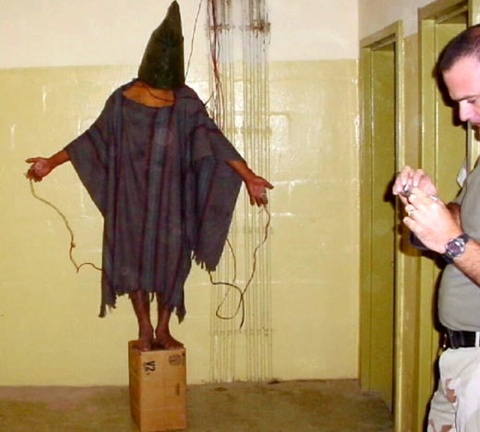
There are three main arguments used:  First, they’re bad guys.  That apparently justifies everything.  Bad guys deserve evil, twisted, sick punishment.  This despite the fact that the majority of these “bad guys” had never even been given a trial, and we’ve already admitted that many were innocent, including at least one we killed through torture.  Abu-Ghraib-tm

Doesn’t matter.  Bad guys.

Second argument is that torture gives us useful information.  This despite the fact that it doesn’t.  The recent study showed that it didn’t.  Previous studies have shown that it doesn’t.  Every single study ever done shows that it doesn’t.

But it works on TV!  In the fantasy world of fiction, torture works and therefore we should base real world policy on what people make up.  People always come up with the kind of situation that, honestly, has never occurred.  (“What if there is a ticking bomb and torture will force the captive to tell us where it is so we can save millions?”)  It’s the same mentality that thinks “If we only all had guns, then whenever the bad guys tried something, all the good guys would fight back and never get hit and all the bad guys would die. That’s how it works in the movies!”

The prisoners in Gitmo were tortured and we learned nothing from them, except maybe how we aren’t always the good guys we like to pretend we are.

Third argument:  It’s not really torture.  “Ah,” as Arthur Dent would say.  “This is apparently a new definition of ‘torture’ of which I am unaware.”

The definitions of torture were written by us, years ago, after WWII especially — Where we punished Nazis (and the Japanese) who did the exact same things to Americans that we later did to al Qaeda suspects. We knew what torture was then, and it hasn’t changed.  It doesn’t stop being torture simply because we’re doing it.

Now, I am not denying that al Qaeda and other terrorist organizations are Bad Guys.  The problem is that by torturing, we’re also the Bad Guys.  There are no Good Guys in that scenario.

Having Bad Guys is a great way to recruit supporters.  “Those Americans torture innocent people.  They’re the Bad Guys.  Join ISIS and fight against the Bad Guys!”  Maybe that was part of the CIA’s plan — they just wanted more terrorists so they can get bigger budgets, I dunno…

Some Fox News assholes — I’m sorry, commentators have proclaimed that even George Washington would have approved of force feeding someone through their anus while they are chained from a ceiling.  As usual, that’s not true either, as Washington said back in 1775 when discussing it with his soldiers:

“Should any American soldier be so base and infamous as to injure any [prisoner]. . . I do most earnestly enjoin you to bring him to such severe and exemplary punishment as the enormity of the crime may require. Should it extend to death itself, it will not be disproportional to its guilt at such a time and in such a cause… for by such conduct they bring shame, disgrace and ruin to themselves and their country.”

Forget about whatever legal arguments you might want to give. Torture is not ethical. It’s not something human beings should do to other human beings.

Slavery was once legal, too. That doesn’t make it right.

No, Illinois has not made the filming of cops illegal

Here’s an important lesson which I hope all readers of this blog already know:

Don’t believe everything you read on the internet.

There’s a new meme going around about how terrible that new law in Illinois is because it makes it a crime to film police! 2009-Dodge-Charger-police-car-1 Except, of course, that it doesn’t.

Mind you, I am all in favor of filming police when they perform their actions.  I support cameras in police cars and on officers. In fact, a dashboard camera video recently helped me get a “not guilty” finding for my client in a trial since it contradicted the officer’s statement and showed that my client was not “intoxicated, staggering, and slurring his words.”

This Illinois law is very similar to one we have here in Pennsylvania, which I support.  It prohibits you being filmed without your consent in private situations.  It does not protect you when you are in obvious public places where your expectation of privacy is minimal.

In other words, the law prevents me from secretly recording a phone call with you, secretly recording a private conversation, or otherwise infringing on your privacy.  It also prevents you from secretly recording a police officer in his private life in matters that are unrelated to his job or in situations where, for instance, the cop is having a private talk with a judge or a lawyer in a courtroom. That’s a good thing.

This law does not protect police officers in the traditional course of their duty, even if they are talking to you privately — because the officer has no “expectation of privacy” in his position.

The law has the support of the ACLU, because it protects privacy.  It’s a good law.  The meme trying to make people dislike it is misguided.

Why do DAs use Grand Juries? (And Why the Ferguson Grand Jury was a Sham)

In every other country and in many of the states, Grand Juries are no longer used.  And for good reason.

If the purpose is to determine whether there is enough evidence to bring a case forward, it’s much better to have a preliminary hearing instead, open to the public, where evidence can be challenged by a defense attorney and reviewed by an independent judge.  grandjury

Yet in states that allow Grand Juries and have preliminary hearings, DAs still use them.  Why?  (If you didn’t read yesterday’s blog about what Grand Juries really are, please read that before continuing.)

A District Attorney usually knows whether he or she will bring charges — and, after all, the chance of a Grand Jury not indicting is smaller than the chance of being hit by lightning, so why do they go through the process?

Because it gives them an advantage.

It allows them to put witnesses on the stand, under oath, without having to deal with defense attorneys objecting or judges stopping them from asking questions they are not supposed to be asking.  And then they have advance notice of what witnesses will say at the preliminary hearing and at the trial.  If a witness changes his or her testimony, the DA can whip out the transcript of the Grand Jury and impeach their testimony.  It’s also a great way to grab up a bunch of suspects, get them under oath, and force them to testify so you can figure out who to charge for the main crime and who to charge with conspiracy.  (Note:  Defense lawyers are allowed to attend but can only advise their clients not to speak; we can’t object to questions or cross-examine.)

The rules here in Pennsylvania allow DAs to hold onto those transcripts of the preliminary hearing and not show the defense attorneys until the actual literal last minute.  Seriously.  I had a trial last year that lasted three weeks and after one of my witnesses took the stand, then the DA had to give me a copy of the transcript from the Grand Jury that he was going to use to impeach her during his cross-examination.  The trial stopped for an hour while I and the other defense counsel rushed through reading it so we could “prepare.”  No wonder DAs like that!

That’s why many lawyers (on both sides) know the Grand Jury system is a sham.  It’s a waste of taxpayer time and money, and harks back to old English common law, predating the Constitution and the rights we usually take for granted (such as open hearings and the right to cross-examine).

DAs also use them for political reasons. In the Ferguson case, it was used to shield the DA from a crime he really never wanted to prosecute in the first place.

He held a Grand Jury and acted more like a defense attorney — even calling the defendant cop as a witness so he could tell his side of the story.  Got that?  The DA called the guy he was supposedly going to prosecute and gave him the opportunity to tell his own version of the story, and the defendant willingly did so — not exercising his right to remain silent — because he knew the DA was never going to prosecute him.

“This trial is a travesty. It’s a travesty of a mockery of a sham of a mockery of a travesty of two mockeries of a sham … ”  — Woody Allen, Bananas

Here’s what you need to remember:  A Grand Jury is not an adversarial proceeding.  It’s a government activity, run completely by the government.  And in this case, the government investigated the government and decided that the government did nothing wrong.

And that should make everyone mad, liberal or conservative.

What IS a Grand Jury, anyway?

“A Grand Jury saw all the evidence and made its decision and therefore justice was served.”

I’m seeing that comment a lot today from people who clearly do not understand the difference between a Grand Jury and a jury.  And it clearly is shaping opinions in the wrong way.grand-jury

A jury is selected by a prosecutor and a defense attorney, who question each of them and have the right to remove any they think are possibly biased.  Then a trial that is open to the public is held. Both sides present evidence and witnesses and cross examine and challenge anything the other side does.  A judge is present to make sure it all runs fairly.  Both sides then give closing arguments summarizing their version of what happened.  And in order to find guilt, the jury needs  to be unanimous and convinced “beyond a reasonable doubt.”

A Grand Jury is none of those things.  A Grand Jury is a group of citizens who have not been challenged or removed for possible bias.  A Grand Jury hearing is closed and secret and not open to the public.  The DA presents whatever evidence he or she wants to without the worry that a defense attorney may cross-examine his witnesses or challenge his evidence.  There is only one side presented.  There is no judge.  And then the only question the jurors have is whether there is enough evidence to send it to a real jury to determine guilt or innocence.

That is a very low burden to meet, which is why 99.99999% of all Grand Juries result in an indictment.

It would be much better if we didn’t call these things Grand Juries, because people hear “jury” and they think “trial.”  There is no trial in a Grand Jury.

I’ve had to defend cases with much less evidence than existed in the Ferguson case. I agree that there was a lot of contradicting testimony but that just means we probably should have a jury hear it all and decide what to believe. Instead, the DA made up his mind and told the jury that we didn’t know so they shouldn’t indict. That’s not how it works!

Seriously, watch the DA’s press conference — he practically admitted that he acted as judge and jury, decided there wasn’t good evidence, and then told the Grand Jury what to do.  Give me a Grand Jury and let me present only the evidence and witnesses I want to without anyone contradicting me and I can get them to go the exact opposite way, I promise you.

President of the Pennsylvania Association of Criminal Defense Lawyers (and friend) Jim Swetz pointed this out:  Former New York state Chief Judge Sol Wachtler famously remarked that a prosecutor could persuade a grand jury to “indict a ham sandwich.” The data suggests he was barely exaggerating: According to the Bureau of Justice Statistics, U.S. attorneys prosecuted 162,000 federal cases in 2010, the most recent year for which we have data. Grand juries declined to return an indictment in 11 of them.

So for the DA not to get an indictment pretty much means he had no intention of getting one — making the whole thing a bit of a sham, done so he can fool people who don’t understand what a Grand Jury is to think that “justice was done.”

The real problem once again (I sound like a broken record) is voting. Ferguson is majority black and most of them never vote. Just like how the US is majority Democrat and we don’t vote. And then we get stuck with a government that does not represent the majority of the people. It’s our fault.